



 Europe Unio (EUR) in English
 Germany (EUR) in Deutsch
 Czech Republic (CZK) in Czech
 France (EUR) in French
 Spain (EUR) in Spanish
 Österreich (EUR) in Deutsch
 Polska (PLN) – Polski


Acoustic Foam vs VocalBoothToGo Sound Blanket (Acoustic curtains) - Comparing Cost/Efficiency
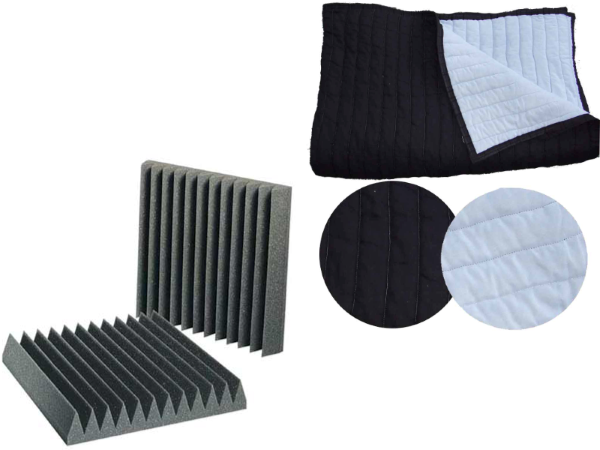 In recording and music studios, when recording vocals, voice-over or instruments, good acoustics make all the difference. Without them, sound bounces off the walls, recordings sound hollow and speech is harder to understand.
Many people believe that good acoustics cost a lot of money, so they reach for acoustic foam.
Are good acoustics really expensive?
Our customers ask this question often, so we have compared acoustic foam and VocalBoothToGo acoustic blankets in terms of sound absorption, price, practicality and maintenance.
In the interest of transparency: we sell acoustic blankets – it is how we make our living. That is why this article only quotes values backed by independent laboratory measurement.
Why people choose acoustic foam
Acoustic foam is the best-known material for acoustic treatment. It appears in photos of many studios, is light, comes in various colours and shapes (wedges, pyramids) and is easy to stick to a wall or ceiling.
Sound absorption compared
The sound absorption of VocalBoothToGo acoustic blankets was measured in the reverberation room of the independent Riverbank Acoustical Laboratories (USA, NVLAP accreditation), with the blankets hanging about 7.5 cm from the wall. According to the European standard EN ISO 11654, the measurement gives the weighted sound absorption coefficient αw: the higher it is, the more sound the material absorbs, and the highest possible value is 1.00. The full report is in the article αw certificate for our acoustic blankets.
- One blanket hung flat: αw = 0.75. From 500 Hz upwards it absorbs over 85 % of the sound, i.e. the whole range of the human voice.
- One blanket hung pleated: αw = 1.00. In deep folds it absorbs over 85 % of the sound from as low as 315 Hz.
- Two blankets one behind the other: αw = 1.00. From 400 Hz upwards they absorb practically 100 % of the sound.
A direct comparison with foam is more difficult. Foam manufacturers usually state absorption using other indicators, often NRC, which cannot be compared directly with αw because they are calculated differently. As a general rule, thin foam absorbs mainly highs and mids but very little bass. For a fair comparison, look for the αw value according to EN ISO 11654 for both materials.
Price vs. value for money
What matters is not the price of a single piece, but how much you pay for the area covered and how long the solution will serve you.
Foam is sold in smaller panels that are glued side by side, and once glued, they usually cannot be used anywhere else. A single acoustic blanket covers an area from 2 × 2 m to 3 × 2 m in one piece, depending on the size. You hang it by its eyelets, take it down whenever you like and take it with you when you move.
You can also match the result to your budget: one blanket hung flat (αw = 0.75) tames echo across the vocal range; for more, hang it in folds or use two blankets one behind the other (αw = 1.00). Deep folds, however, take roughly twice as much material. Current prices for all sizes are in the acoustic blankets category.
Practicality of use
Foam is glued directly to the wall or ceiling. Once it is up, you cannot move it, and because it tears easily, it is difficult to take down without damaging the foam or the wall.
Acoustic blankets are not glued; they hang from eyelets (the VB70G, for example, has eight along one side). With a small air gap from the wall the blankets are even more effective. Hung around the microphone, they easily create a vocal booth, and folded up, they go with you to a shoot or to a new home.
Like foam, however, blankets are not soundproof: they absorb sound so that it no longer bounces around the room.
How the two materials absorb sound
Acoustic foam is a porous, open-cell material. Sound enters its tiny channels and loses energy through friction against their walls. The wedge or pyramid profile increases the surface that catches the sound.
Blankets absorb sound with a filling of health-safe recycled fibres (a blend of cotton and polyester) covered with a strong polyester fabric. Sound sets the fibres vibrating and its energy is converted into a tiny amount of heat.
Cleaning and maintenance
The textured surface of foam is an excellent dust trap. Glued foam cannot simply be taken down and cleaned; at most, you can vacuum it carefully.
A blanket can be taken down, shaken out and aired. According to the instructions on the product page, it can also be washed in an ordinary washing machine with a capacity of at least 8 kg on the synthetics programme at 30 °C.
Conclusion: foam or blankets?
Foam may be enough for a small area if appearance matters most and it will stay permanently in one place. For a larger room, a portable solution or rented accommodation, acoustic blankets with measured absorption are the more practical choice: αw = 0.75 hung flat and 1.00 pleated or in two layers. Choose the right size in the VocalBoothToGo acoustic blankets category.